

Skin Repair Market to Surge from USD 90.58 Billion in 2025 to USD 160.46 Billion by 2034
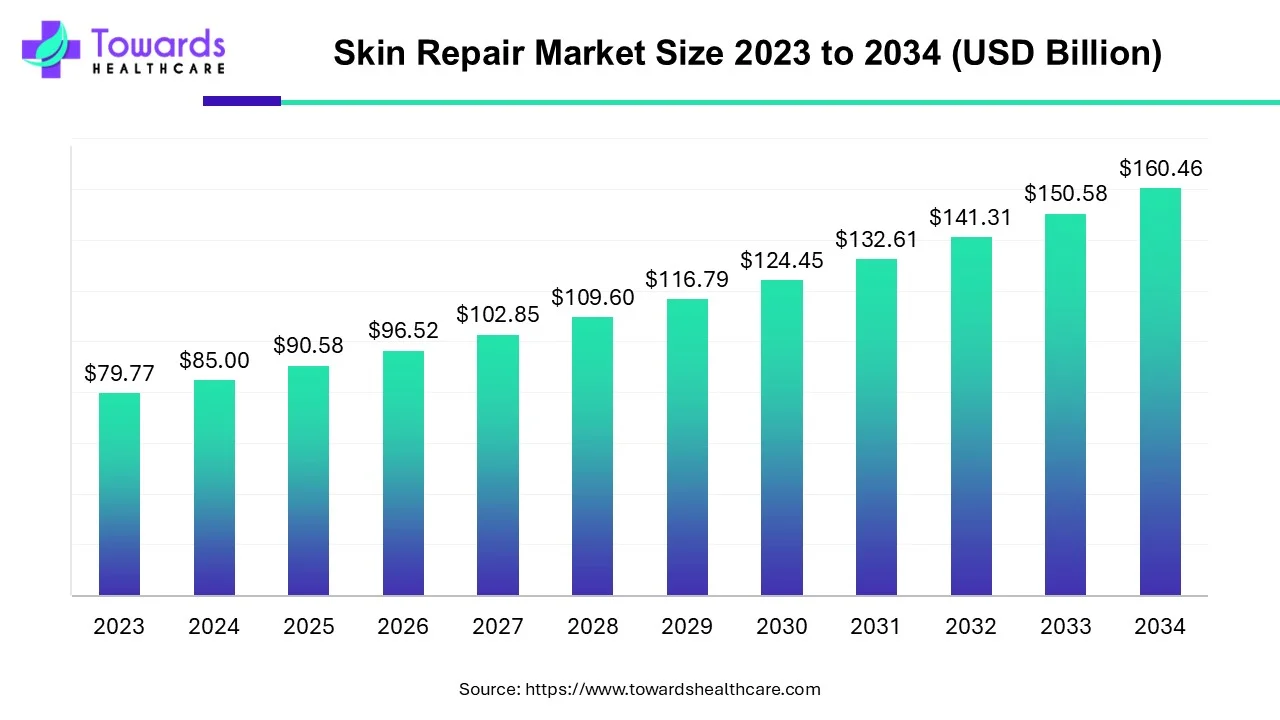
The global skin repair market size was valued at USD 85 billion in 2024 and is predicted to hit around USD 160.46 billion by 2034, rising at a 6.56% CAGR, a study published by Towards Healthcare a sister firm of Precedence Research.
Ottawa, Dec. 01, 2025 (GLOBE NEWSWIRE) -- The global skin repair market size is calculated at USD 90.58 billion in 2025 and is expected to reach around USD 160.46 billion by 2034, growing at a CAGR of 6.56% for the forecasted period, driven by the increasing awareness among consumers and rising disposable income, which fuels the growth of the market.
The Complete Study is Now Available for Immediate Access | Download the Sample Pages of this Report @ https://www.towardshealthcare.com/download-sample/5482
Key Takeaways
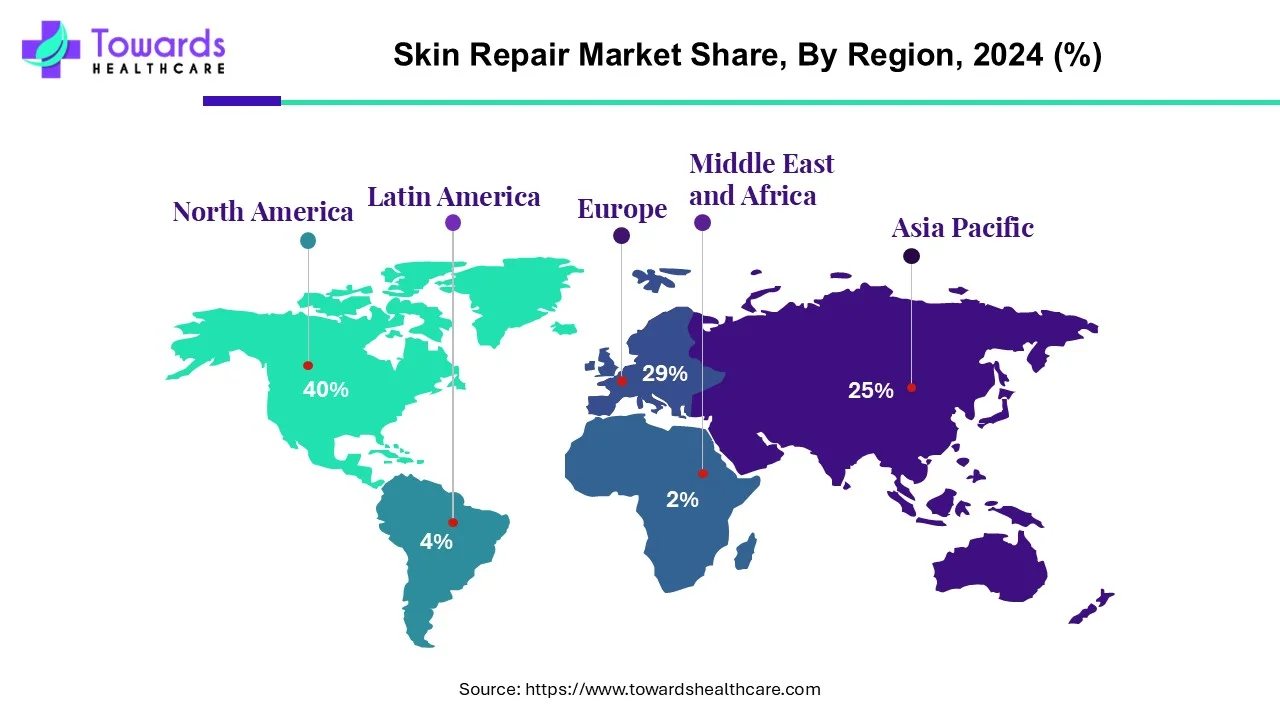
- North America dominated the global market share by 40% in 2024.
- Asia-Pacific is anticipated to grow at a significant rate in the skin repair market during the forecast period.
- By product type, the topical products segment held a dominant presence in the market in 2024.
- By product type, the skin repair devices/technology segment is predicted to witness significant growth in the market over the forecast period.
- By application, the wound care segment held the largest share of the market in 2024.
- By application, the cosmetic applications segment is anticipated to show lucrative growth in the skin repair market over the coming years.
- By end-user, the hospitals & clinics segment led the global market in 2024.
- By end-user, the online retailers segment is estimated to grow at the fastest rate in the market over the coming years.
Market Overview & Potential
Skin repair involves restoring the epidermal barrier and healing wounds, which go through multiple cellular and molecular stages. The skin barrier can be weakened by various factors, including harsh skincare routines and environmental pollutants. In minor injuries, the wound healing process begins with the accumulation of white blood cells (WBCs) and phagocytic macrophages at the injury site. For major injuries, repair mechanisms may be insufficient to restore the skin to its original state. Therefore, suturing the edges of injured skin or replacing lost skin with grafts may be necessary.
Many active ingredients and medical devices are used for skin wound repair. The increasing prevalence of non-healing skin wounds highlights the need for effective skin repair products. Ongoing research and development lead to the creation of new active ingredients and medical devices, driving market growth. Technological advances fuel innovations in skin repair products. Furthermore, rising investments and collaborations support the market, alongside favorable government policies and regulatory frameworks. The expanding pharmaceutical and cosmetic sectors, along with increasing awareness of aesthetic skin, also contribute to market growth.
You can place an order or ask any questions, please feel free to contact us at sales@towardshealthcare.com
What is the Growth Potential Responsible for The Growth of The Skin Repair Market?
The key growth drivers of the skin repair and skincare market are rising consumer income and a growing focus on personal appearance and grooming, particularly among the expanding middle class and increasingly aware male population. Other factors include the increasing demand for natural and organic products due to concerns over chemical ingredients, the impact of social media on self-care trends, and the development of advanced personalized skincare solutions powered by artificial intelligence.
As consumers' disposable incomes rise and the middle classes expand, they can afford to splurge on premium and specialized skincare products, shifting their focus from basic needs to specific concerns like aging and sun protection. Greater awareness of skin health, hygiene, and the connection between appearance and lifestyle choices fuels demand for effective skincare.
What Are the Growing Trends Associated with the Skin Repair Market?
Demand for Natural & Organic Products:
- Consumers are increasingly looking for chemical-free, organic, and natural formulations.
Growth in Sensitive Skin Care:
- The market for gentle and hypoallergenic products is expanding significantly due to rising awareness of skin sensitivities.
Multifunctional Products:
- Products offering multiple benefits and addressing various skin concerns are gaining popularity.
Personalization:
- There is a growing demand for tailored skincare solutions and products with transparent ingredient lists.
What Is the Growing Challenge in the Skin Repair Market?
The skin repair market is up against several challenges, including a widespread issue with counterfeit products that erode consumer trust. Other hurdles include high costs for premium, specialized, or organic ingredients, fierce competition from many brands, and shifting consumer demands for personalized, digital-first approaches. Brands also need to contend with varying regulatory environments and address concerns about the use of potentially toxic chemical ingredients versus natural alternatives.
Become a valued research partner with us - https://www.towardshealthcare.com/schedule-meeting
Regional Analysis
How Did North America Dominate the Skin Repair Market in 2024?
North America dominated the global market share by 40% in 2024. North America holds a dominant position in the skin repair market due to its advanced healthcare infrastructure, strong dermatology sector, and high consumer spending on skincare. Hospitals and clinics in the region extensively use both topical formulations and advanced devices for wound healing and post-surgical recovery.
Additionally, cosmetic applications such as scar reduction, anti-aging, and skin rejuvenation are driving adoption in medical spas and dermatology centers. The presence of key players, coupled with continuous innovation and high awareness of skincare, further strengthens market growth across the region.
What Made the Asia Pacific Significantly Grow in The Skin Repair Market In 2024?
Asia-Pacific is anticipated to grow at a significant rate in the skin repair market during the forecast period. Asia Pacific is experiencing rapid growth in the skin repair market, fueled by rising healthcare investments, expanding access to dermatology services, and growing consumer interest in skincare. Demand is particularly strong in cosmetic applications, as younger populations and middle-class consumers increasingly adopt advanced skin repair solutions.
Additionally, the region’s large patient base requiring chronic wound care supports the adoption of topical and device-based therapies. The expansion of online retail and medical tourism also enhances accessibility, positioning the Asia Pacific as a fast-emerging hub for both clinical and cosmetic skin repair solutions.
Get the latest insights on life science industry segmentation with our Annual Membership: https://www.towardshealthcare.com/get-an-annual-membership
Segmental Insights
By Product Type,
The topical products segment held a dominant presence in the market in 2024. Topical products dominate the skin repair market, including creams, ointments, serums, and gels designed for wound healing, scar reduction, and cosmetic skin repair. They are widely used due to their easy application, accessibility, and effectiveness in both clinical and home care settings. Growing demand for natural and bioactive ingredients, along with consumer focus on skincare and aesthetics, is driving innovation and expansion in this segment.
The skin repair devices/technology segment is predicted to witness significant growth in the market over the forecast period. Skin repair devices/technology cover advanced tools like light therapy devices, ultrasound systems, and micro-needling technologies. These are increasingly adopted in hospitals, clinics, and dermatology centers for treating chronic wounds, burns, and cosmetic skin repair. Their ability to accelerate healing, stimulate collagen production, and provide targeted treatment makes them a valuable addition to modern skincare and wound management practices. Rising preference for non-invasive solutions is boosting growth in this segment.
By Application,
The wound care segment held the largest share of the market in 2024. Wound care represents a significant application area in the skin repair market, covering chronic wounds, surgical incisions, and burn injuries. Both topical products and advanced devices are used to accelerate healing, minimize infection risk, and improve patient outcomes. The rising incidence of diabetes-related ulcers and surgical procedures is fueling demand. Healthcare providers are increasingly adopting integrated wound management solutions combining traditional and advanced skin repair products.
The cosmetic applications segment is anticipated to show lucrative growth in the skin repair market over the coming years. Cosmetic applications are gaining momentum, driven by consumer interest in anti-aging, scar reduction, and skin rejuvenation. Products such as topical serums, bioactive gels, and light-based devices are used to repair skin damage caused by sun exposure, acne, or aging. This segment benefits from strong demand in dermatology clinics, medical spas, and even at-home skincare routines. Growing emphasis on appearance and wellness is expanding opportunities for cosmetic-focused skin repair solutions.
By End-User,
The hospitals & clinics segment led the global market in 2024. Hospitals and clinics account for a major share of the skin repair market, particularly for wound care and surgical recovery. Healthcare facilities rely on both topical formulations and advanced technologies to treat acute and chronic skin injuries. The clinical setting ensures professional application, patient monitoring, and integration with other treatment protocols. Rising patient admissions for surgical interventions and chronic wound care continue to strengthen this end-use segment.
The online retailers segment is estimated to grow at the fastest rate in the market over the coming years. Online retailers have emerged as an important distribution channel for skin repair products, especially cosmetic creams, gels, and at-home devices. E-commerce platforms provide consumers with convenient access, product variety, and detailed information, driving higher adoption. Increasing awareness of skincare, coupled with strong demand for direct-to-consumer solutions, is fueling rapid expansion in this segment. Subscription models and digital health platforms are further enhancing growth opportunities for online distribution.
Browse More Insights of Towards Healthcare:
The global skin anesthetic cream market size is calculated at US$ 2.35 billion in 2024, grew to US$ 2.5 billion in 2025, and is projected to reach around US$ 4.36 billion by 2034. The market is expanding at a CAGR of 6.36% between 2025 and 2034.
The global skin repair market size is calculated at USD 85 billion in 2024, grew to USD 90.58 billion in 2025, and is projected to reach around USD 160.46 billion by 2034. The market is expanding at a CAGR of 6.56% between 2025 and 2034.
The global skin repair dressing market was estimated at US$ 8.06 billion in 2023 and is projected to grow to US$ 16.45 billion by 2034, rising at a compound annual growth rate (CAGR) of 6.7% from 2024 to 2034.
The global personalized skin care products market size is calculated at US$ 30.63 in 2024, grew to US$ 33.09 billion in 2025, and is projected to reach around US$ 66.37 billion by 2034. The market is expanding at a CAGR of 8.04% between 2025 and 2034.
The global topical drug delivery market size is calculated at US$ 247.3 billion in 2024, grew to US$ 268.99 billion in 2025, and is projected to reach around US$ 568.65 billion by 2034. The market is expanding at a CAGR of 8.76% between 2025 and 2034.
The drug-induced dyskinesia market size is calculated at US$ 418 million in 2024, grew to US$ 436.2 million in 2025, and is projected to reach around US$ 627.5 million by 2034. The market is expanding at a CAGR of 4.34% between 2025 and 2034.
The U.S. anti-aging market size is calculated at US$ 20.21 billion in 2024, grew to US$ 21.61 billion in 2025, and is projected to reach around US$ 39.6 billion by 2034. The market is expanding at a CAGR of 6.95% between 2025 and 2034.
The global dermal fillers market size is calculated at USD 8.51 billion in 2025, grow to USD 9.79 billion in 2026, and is projected to reach around USD 34.64 billion by 2035. The market is expanding at a CAGR of 15.07% between 2026 and 2035.
The global acne treatment market is expected to grow from USD 11.03 billion in 2025 to USD 16.82 billion by 2034, with a CAGR of 4.8% throughout the forecast period from 2025 to 2034.
Recent Developments in the Skin Repair Market
- In March 2025, researchers from Aalto University and the University of Bayreuth developed a novel self-healing hydrogel that mimics the qualities of human skin. The hydrogel was found to repair itself up to 90% in 4 hours and fully restore within 24 hours.
- In March 2025, Lucas Meyer Cosmetics announced the launch of Melicica, a natural skin repair ingredient inspired by the traditional healing properties of honey. Melicica is a natural extract of Jelly Bush honey that can be used for skin repair, scar and acne-prone skin care, tone, evening and brightening, texture improvements, and post-procedure recovery.
Skin Repair Market Key Players
- Beiersdorf AG
- Johnson & Johnson
- Kao Corporation
- Kaya Ltd.
- Lucas Meyer Cosmetics
- Marico Ltd.
- Nu Skin Enterprises
- OneSkin
- Otsuka Pharmaceuticals Co. Ltd.
- Procter & Gamble
- Revlon
- Rubedo Life Sciences
- Shiseido
- Unilever
Segments Covered in The Report
By Product
- Topical Products
- Skin Repair Devices/Technology
- Injectable Products
By Application
- Wound Care
- Cosmetic Applications
- Scar Reduction & Management
By End-User
- Hospitals & Clinics
- Online Retailers
- Pharmacies & Drug Stores
- Department Stores & Beauty Stores
By Region
- North America
- U.S.
- Canada
- Asia Pacific
- China
- Japan
- India
- South Korea
- Thailand
- Europe
- Germany
- UK
- France
- Italy
- Spain
- Sweden
- Denmark
- Norway
- Latin America
- Brazil
- Mexico
- Argentina
- Middle East and Africa (MEA)
- South Africa
- UAE
- Saudi Arabia
- Kuwait
Immediate Delivery Available | Buy This Premium Research @ https://www.towardshealthcare.com/checkout/5482
Access our exclusive, data-rich dashboard dedicated to the healthcare market - built specifically for decision-makers, strategists, and industry leaders. The dashboard features comprehensive statistical data, segment-wise market breakdowns, regional performance shares, detailed company profiles, annual updates, and much more. From market sizing to competitive intelligence, this powerful tool is one-stop solution to your gateway.
Access the Dashboard: https://www.towardshealthcare.com/access-dashboard
About Us
Towards Healthcare is a leading global provider of technological solutions, clinical research services, and advanced analytics, with a strong emphasis on life science research. Dedicated to advancing innovation in the life sciences sector, we build strategic partnerships that generate actionable insights and transformative breakthroughs. As a global strategy consulting firm, we empower life science leaders to gain a competitive edge, drive research excellence, and accelerate sustainable growth.
You can place an order or ask any questions, please feel free to contact us at sales@towardshealthcare.com
Europe Region: +44 778 256 0738
North America Region: +1 8044 4193 44
APAC Region: +91 9356 9282 04
Web: https://www.towardshealthcare.com
Our Trusted Data Partners
Precedence Research | Statifacts | Towards Packaging | Towards Automotive | Towards Food and Beverages | Towards Chemical and Materials | Towards Consumer Goods | Towards Dental | Towards EV Solutions | Nova One Advisor | Healthcare Webwire | Packaging Webwire | Automotive Webwire | Nutraceuticals Func Foods | Onco Quant | Sustainability Quant | Specialty Chemicals Analytics
Find us on social platforms: LinkedIn | Twitter | Instagram | Medium | Pinterest


Legal Disclaimer:
EIN Presswire provides this news content "as is" without warranty of any kind. We do not accept any responsibility or liability for the accuracy, content, images, videos, licenses, completeness, legality, or reliability of the information contained in this article. If you have any complaints or copyright issues related to this article, kindly contact the author above.
