

Hemp Seed Oil Market Set for Rapid Expansion at 19.3% CAGR, Says Towards FnB
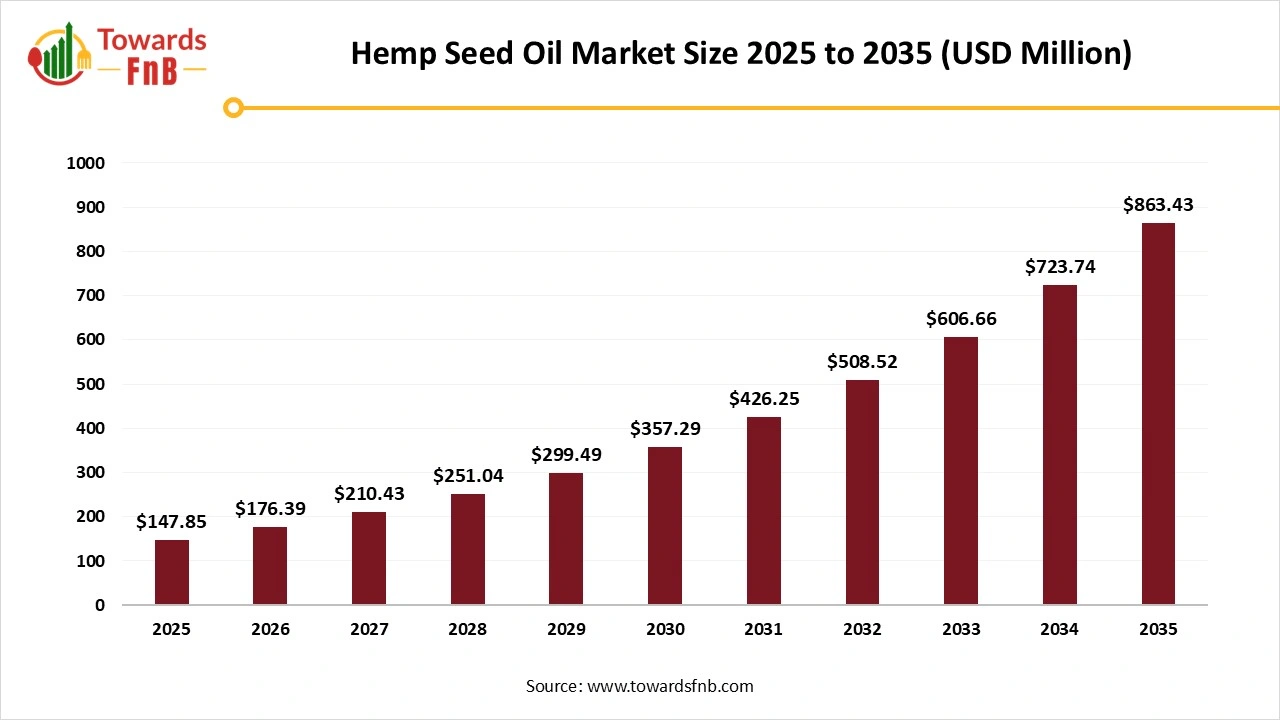
According to Towards FnB, the global hemp seed oil market size is evaluated at USD 176.39 million in 2026 with an expected growth trajectory that will take it to approximately USD 863.43 million by 2035, growing at an impressive CAGR 19.3% during the period from 2026 to 2035. The market’s strong momentum reflects a sustained growth outlook through 2035, supported by increasing commercialization of hemp-derived ingredients and broader acceptance across regulated consumer markets.
Ottawa, Jan. 28, 2026 (GLOBE NEWSWIRE) -- The global hemp seed oil market size was valued at USD 147.85 million in 2025 and is predicted to grow from USD 176.39 million in 2026 to reach around USD 863.43 million by 2035, as reported by Towards FnB, a sister firm of Precedence Research.
The market is expected to grow due to increased demand for the product in various applications across different industries, including cosmetics, personal care products, and the food and beverage sector. The market is also expected to grow due to higher demand for clean-label and high-quality ingredients to maintain the quality of products.
Note: This report is readily available for immediate delivery. We can review it with you in a meeting to ensure data reliability and quality for decision-making.
Access the Full Study Instantly | Download Sample Pages of the Report Now@ https://www.towardsfnb.com/download-sample/5988
Key Highlights of Hemp Seed Oil Market
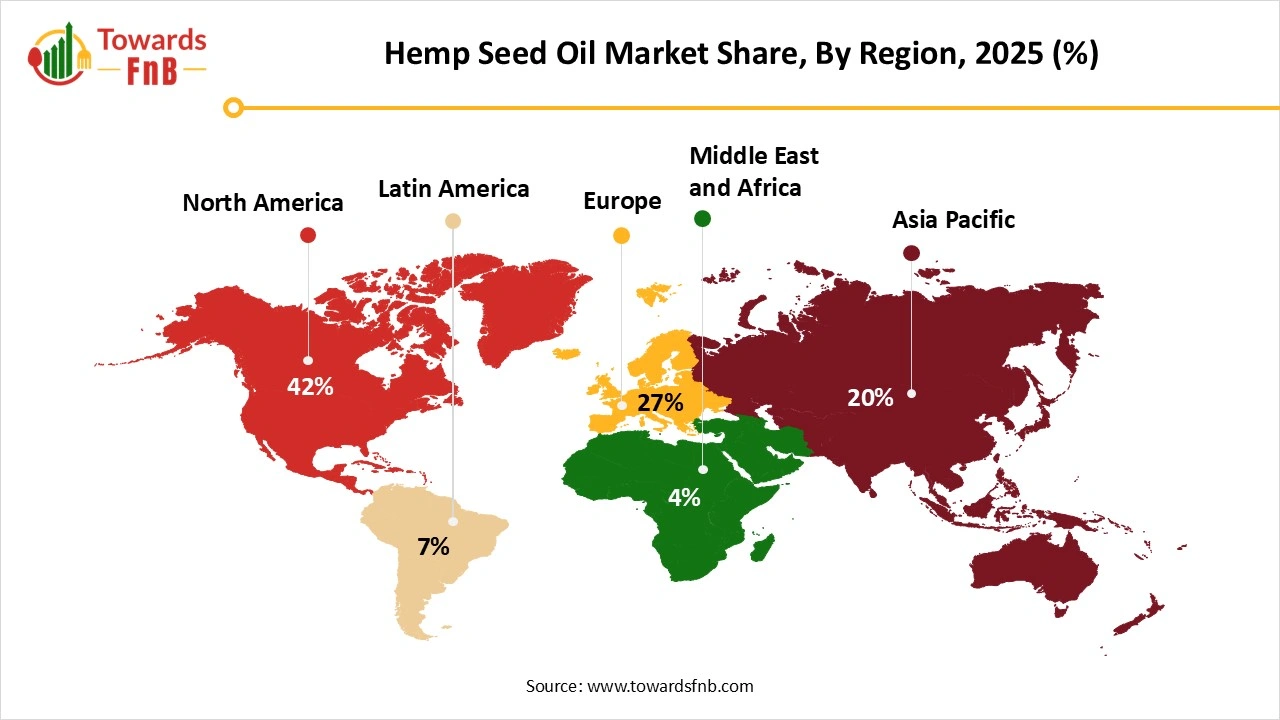
- By region, North America led the hemp seed oil market with largest share of 42% in 2025, whereas the Middle East and Africa are expected to be the fastest-growing regions in the foreseeable period.
- By nature, the conventional segment dominated the hemp seed oil market in 2025, whereas the organic segment is expected to grow in the foreseeable period.
- By type, the cold-pressed segment led the hemp seed oil market in 2025, whereas the refined segment is expected to grow in the foreseen period.
- By distribution channel, the B2B segment led the hemp seed oil market in 2025, whereas the B2C segment is expected to grow in the foreseen period.
Higher Demand for Natural Options is fueling the Growth of the Hemp Seed Oil Industry
The hemp seed oil market is expected to grow due to higher demand for plant-based and natural options, fueling the growth of the market. Expansion of application of hemp seed oil for various applications such as personal care products, cosmetics, food and beverages is another major factor for the growth of the market. Multiple health benefits of the plant-based product are another major option for the growth of the market. The hemp seed oil is rich in vitamins and omega-3, which are helpful to improve skin as well as strengthen immunity.
The rising legalization of the easy cultivation of hemp seed oil is one of the major factors for the growth of the market. Higher versatility of the product in major industries involving pharmaceuticals is another major factor propelling the growth of the market. Supportive government regulations, along with easy availability of the product on various platforms and maintained sustainability, also help to fuel the growth of the market in the foreseeable period.
Technological Advancements are helpful for the Growth of the Hemp Seed Oil Market
Technologically advanced procedures in the form of new extraction methods, microwave pretreatment, CO₂ extraction, and advanced cold-pressing are used to maintain the nutrients of the product and enhance its quality. Precision agriculture helps to improve strain development, and nanotechnology helps to enhance bioavailability for edibles, further fueling the growth of the market. Waste utilization, along with streamlined processing, is another major factor for the growth of the market. Hence, such factors altogether help to fuel the growth of the market.
Impact of AI in the Hemp Seed Oil Market
Artificial intelligence is increasingly being applied across the global hemp seed oil market to improve oil yield optimization, compositional consistency, and quality assurance from cultivation through processing and export. Machine learning models analyze agronomic data such as hemp varietal traits, seed maturity, climate conditions, and harvest timing to predict oil content and fatty acid profiles, supporting more precise sourcing decisions across diverse growing regions. In processing, AI-driven optimization tools are used to refine cold-pressing and mechanical extraction parameters by modeling pressure, temperature, and throughput effects on oil yield, oxidation stability, and retention of polyunsaturated fatty acids.
AI-enabled quality control systems also correlate spectral and chemical data with oxidation markers, peroxide values, and sensory indicators to detect early degradation risks during storage and transport, which is particularly important for long-distance, cross-border supply chains. From a formulation and commercialization perspective, AI supports standardization of nutritional specifications by predicting batch-to-batch variability and aligning output with functional food, dietary supplement, and cosmetic ingredient requirements. On the regulatory and trade side, AI assists producers in managing global compliance by mapping product specifications, contaminant thresholds, and labeling requirements against international food safety and quality frameworks referenced by the Food and Agriculture Organization and Codex Alimentarius Commission, helping exporters navigate multi-market approval processes more efficiently.
Recent Developments in Hemp Seed Oil Market
- In April 2025, IND HEMP, a leading industrial hemp producer and processor in the US, along with the National Hemp Association (NHA), announced the launch of their nutrition-based strategy to tackle the serious issue of rising malaria using hemp seed oil.
- In December 2025, Himachal Pradesh chief minister, Sukhvinder Singh Sukhu, launched the ‘Green to Gold’ initiative to use the stigmatized wild plant- hemp or cannabis- as a valuable industrial and medicinal resource to transform the state by 2027.
View Full Market Intelligence@ https://www.towardsfnb.com/insights/hemp-seed-oil-market
New Trends of the Hemp Seed Oil Market
- Higher usage of hemp seed oil for the manufacturing of personal care products due to its antioxidants and rich texture quality is helpful for the growth of the market.
- Hemp seed oil is rich in omega-3 along with various other essential nutrients, making the ingredient helpful for the manufacturing of nutraceuticals and other nutritional supplements, further fueling the growth of the market.
- Higher demand for sustainability and organic options also helps to fuel the growth of the market.
- Product innovation, allowing manufacturers to make hemp seed oil a versatile ingredient, is another major factor for the growth of the market.
- Higher legalization, allowing manufacturers to make different varieties of products to use their benefits to the fullest, is another major factor for the growth of the market.
“Hemp seed oil is moving beyond novelty into mainstream formulation strategies. Its nutritional profile, regulatory momentum, and sustainability alignment make it one of the most commercially resilient plant-based oils in the next decade,” said Vidyesh Swar, Principal Consultant at Towards FnB
Product Survey of the Hemp Seed Oil Market
| Product Category | Description or Function | Common Forms or Variants | Key Applications or User Segments | Representative Brands or Product Types |
| Cold-Pressed Hemp Seed Oil | Mechanically extracted oil retaining natural fatty acid profile and bioactives | Unrefined, virgin oil | Functional foods, dietary supplements | Cold-pressed hemp seed oil ingredients |
| Refined Hemp Seed Oil | Filtered and deodorized oil with neutral flavor and improved stability | Refined, light-colored oil | Food manufacturing, cosmetic formulations | Refined hemp seed oil |
| Organic Hemp Seed Oil | Produced from certified organic hemp seeds | Organic-certified oil variants | Organic food and personal care brands | Organic hemp seed oil products |
| Nutritional Hemp Seed Oil | Oil positioned for balanced omega-6 to omega-3 fatty acid content | Food-grade bottled oils | Functional foods, nutrition brands | Nutritional hemp seed oil |
| Hemp Seed Oil for Supplements | Concentrated oil designed for encapsulation or liquid supplements | Softgel-grade oils, liquid supplements | Dietary supplement manufacturers | Supplement-grade hemp seed oil |
| Cosmetic-Grade Hemp Seed Oil | Oil meeting cosmetic purity and stability requirements | Cosmetic-grade refined oils | Skincare and personal care brands | Hemp seed oil for cosmetics |
| Hemp Seed Oil for Foodservice | Bulk-format oil for commercial kitchens and food preparation | Drums, bulk containers | Foodservice operators, restaurants | Bulk hemp seed oil supplies |
| Blended Hemp Seed Oils | Hemp seed oil blended with other nutritional oils | Omega oil blends | Functional food and supplement brands | Hemp-based oil blends |
| High-Stability Hemp Seed Oil | Modified or stabilized oil designed for improved shelf life | Antioxidant-stabilized variants | Food manufacturers | Stabilized hemp seed oil formulations |
| Private Label Hemp Seed Oil | Contract-manufactured hemp seed oil products | Retail-ready bottled oils | Retailers, wellness brands | Private-label hemp seed oil products |
For Detailed Pricing and Tailored Market Report Options, Click Here: https://www.towardsfnb.com/checkout/5988
Hemp Seed Oil Market Dynamics
What Are the Growth Drivers of Hemp Seed Oil Market?
Multiple health benefits of hemp seed oil are one of the major factors for the growth of the market. The plant-based product is enriched with omega-3, antioxidants, vitamins, and proteins, which help to fuel the market’s growth by providing multiple health benefits to consumers to maintain their healthy lifestyle. Higher demand for clean-label, organic, and functional options is another major factor for the growth of the market.
Government support and increasing legalization to allow easy access and easy sale of hemp seed oil products, allowing consumers to avail themselves of its benefits, is another major factor propelling the growth of the hemp seed oil market. Product versatility, allowing manufacturers to manufacture different products in different industries such as food and beverages, cosmetics, and personal care products, also helps to elevate the market’s growth.
High Costs Hampering the Growth of the Hemp Seed Oil Market
Higher costs involved for planting, harvesting, and processing of hemp seed oil for the manufacturing of various products are one of the restrictions in the growth of the market. Processes such as compliance testing requiring additional costs are another restriction on the growth of the market. Hence, such factors altogether hamper the growth of the market.
The Growing Pharmaceutical and Nutraceutical Industry Is Fueling the Growth of the Hemp Seed Oil Market
Higher usage of hemp seed oil in the manufacturing of different types of nutraceutical and pharmaceutical products is another major factor for the growth of the market. Hemp seed oil is enriched with omega-3 fatty acids, antioxidants, vitamins, minerals, and various other essential nutrients, allowing manufacturers to further fuel the growth of the market. Hence, such factors help consumers to avoid lifestyle-related health issues, propelling the growth of the market.
Hemp Seed Oil Market Regional Analysis
North America Led the Hemp Seed Oil Market in 2025
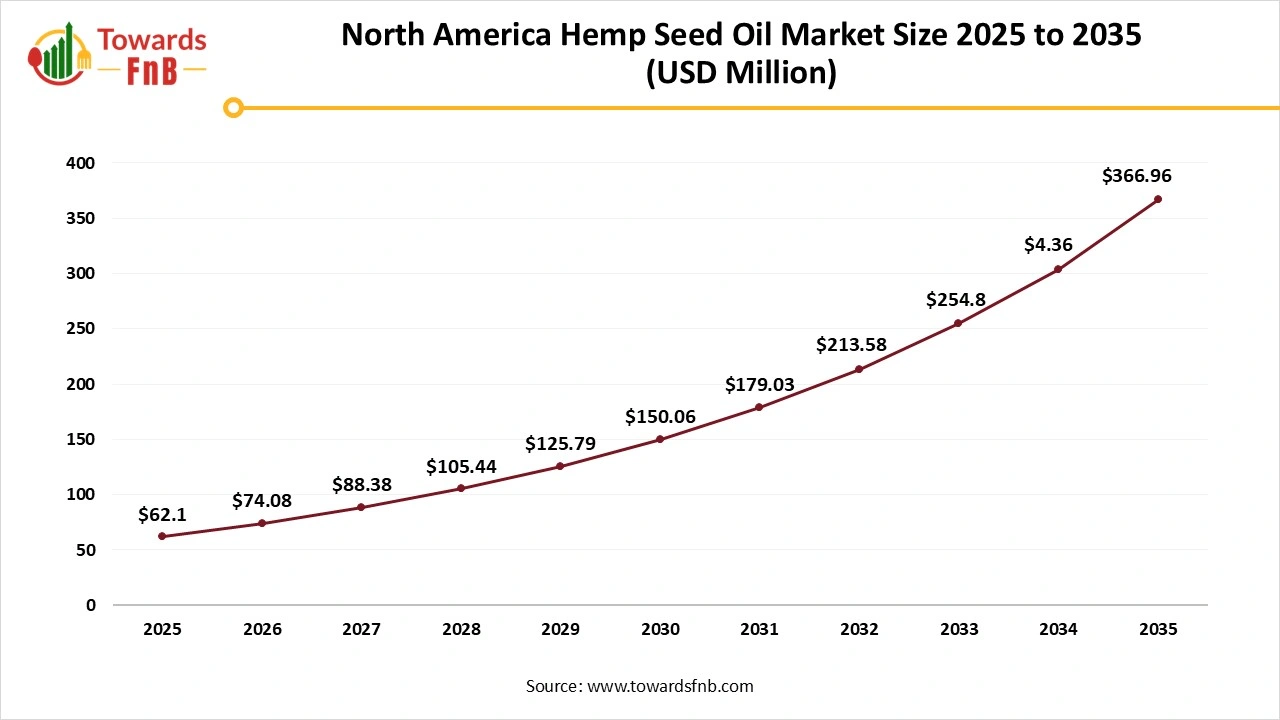
North America dominated the hemp seed oil market in 2025 due to higher demand for clean-label and organic ingredients by consumers in the region, leading to the growth of the market. Versatile application of hemp seed oil in different industries, such as food and beverages, personal care products, and cosmetics, also helps to fuel the growth of the market. Higher shift of consumers towards plant-based, vegan, and healthier lifestyles in the region also helps to fuel the growth of the market. The US has made a major contribution to the growth of the market due to a higher consumer shift towards vegan, sustainable, clean-label, and natural products.
The Middle East and Africa Are Observed to Be the Fastest-Growing Region in the Foreseeable Period
The Middle East and Africa are observed to be the fastest-growing regions in the foreseen period due to rapid legalization, rising disposable income, and rising awareness regarding the health benefits of hemp seed oil, which is helpful for the growth of the market. Higher demand for healthier and sustainable options in the food and beverage industry, personal care, and cosmetic industry also helps to fuel the market’s growth.
Consumers shifting towards consumption of healthier bars, dressings, sauces, and functional drinks also helps to fuel the market’s growth. South Africa has made a major contribution to the growth of the market due to diverse applications of hemp seed oil in the region, such as pharmaceuticals, food and beverages, cosmetics, and personal care products, fueling the growth of the market in the foreseeable period.
Asia Pacific Is Observed to Have a Notable Growth in the Foreseen Period
Asia Pacific is observed to have a notable growth in the foreseen period due to a higher inclination of consumers towards sustainable, natural, organic, and plant-based options in the region. Multiple applications of the product in various domains and higher health benefits of the product are another major factor for the growth of the market. China has made a major contribution to the growth of the market due to higher demand for natural, sustainable, healthy, and clean-label options in the region, fueling the growth of the market in the foreseeable future.
Trade Analysis for the Hemp Seed Oil Market
What Is Actually Traded (Product Forms and HS Proxies)
- Cold-pressed and refined hemp seed oil used in nutrition, culinary, cosmetic, and industrial applications is commonly classified under HS 151590 (other fixed vegetable fats and oils and their fractions) when traded as edible or cosmetic-grade oil. (Typical global trade practice; see HS code interpretations for hemp seed oil products.)
- Hemp seed oil blends and fortified preparations intended for food, supplement, or cosmetic use are often declared under HS 330290 (mixtures of odoriferous substances and mixtures with a basis of these substances) when formulated with additives or aroma components. (HS classification practices for derived oils and mixtures.)
- Hemp seed oil raw materials for processing or refining that have not been bottled or finished may be assigned broader vegetable oil HS codes in Chapter 15 depending on purity and refinement level. (Global HS code conventions for vegetable oils.)
- Organic and specialty hemp seed oils for high-end cosmetic or therapeutic uses are also traded under the same HS codes but accompanied by organic certification and quality tags that influence customs requirements. (Organic raw material trade practice.)
-
Packaging components such as bottles, containers, and caps are traded separately under HS 3923 (plastics articles) or HS 7010 (glass containers) and do not count as the product itself. (Standard packaging HS categories.)
Top Exporters (Supply Hubs)
- China: A major exporter of hemp seed oil, accounting for a significant share of global shipments and serving both food and cosmetic ingredient markets.
- South Korea: Notable exporter of hemp seed oil used in cosmetics, nutraceuticals, and industrial products.
- Canada: Key supplier of high-quality hemp seed oil driven by its well-established hemp cultivation and processing industry.
- France and European Union producers: Exporters of hemp seed oil, particularly into premium food and skincare ingredient markets within and outside Europe.
-
India: Emerging exporter of hemp seed oil to Asia and Middle Eastern markets, reflecting growing processing capacity.
Top Importers (Demand Centres)
- United States: One of the largest importers of hemp seed oil for food, supplements, and cosmetic applications, driven by high demand from nutraceutical and natural product segments.
- Turkey: A significant importer of hemp seed oil reflecting growing use in food and personal care industries.
- Russia: Growing importer tied to expanding domestic processing and increasing interest in natural oils.
- India: Importer of hemp seed oil for cosmetic and food-linked wellness applications.
-
Vietnam and Mexico: Import markets for hemp seed oil in beverage, food processing, and cosmetics.
Typical Trade Flows and Logistics Patterns
- Bulk shipments of hemp seed oil are shipped via containerized sea freight from major producing regions (Asia, Europe, North America) to global demand centres due to volume and cost efficiency.
- High-value refined or bottled hemp seed oil is sometimes shipped by air freight to meet rapid replenishment cycles for niche cosmetic and health-food markets.
- Regional distribution and repackaging hubs handle quality checks, compliance labeling, and local redistribution to manufacturers and retailers.
- Seasonality and availability of hemp raw materials influence trade timing, with peak exports linked to harvest and production cycles.
Trade Drivers and Structural Factors
- Rising consumer interest in natural and functional oils supports growth in global demand for hemp seed oil in food, nutraceutical, and cosmetic applications.
- Functional ingredient trends, especially for omega-3 fatty acids and plant-based oils, drive industrial and retail import demand.
- Regulatory liberalization of hemp cultivation and processing in many countries expands the pool of exporters and stimulates global trade.
- Premium positioning in wellness and natural cosmetics sectors interlinks with higher-value export flows.
-
Agricultural production trends (e.g., shifts in hemp seed supply) influence exporter competitiveness and seasonal trade flows.
Regulatory, Quality, and Market-Access Considerations
- Hemp seed oil must comply with food safety, dietary supplement, and cosmetic ingredient regulations in importing countries, including allowed cannabinoid levels and labeling.
- HS code selection (e.g., 151590 vs 330290) impacts tariff treatment, documentation requirements, and entry procedures at customs.
- Certification for organic, non-GMO, or premium quality status can influence market access and pricing in destination markets.
- Documentation on ingredient origin, processing, and safety testing is required for customs clearance in many markets.
Government Initiatives and Public-Policy Influences
- Policies encouraging hemp cultivation and processing (e.g., agricultural reforms, crop support programs) expand raw material availability and export potential.
- Public health and nutrition policies that promote functional plant oils indirectly stimulate import demand.
-
Trade facilitation agreements and customs harmonization influence tariff rates and procedural ease for hemp seed oil trade.
Hemp Seed Oil Market Report Scope
| Report Attribute | Key Statistics |
| Base Year | 2025 |
| Forecast Period | 2026 to 2035 |
| Growth Rate from 2026 to 2035 | CAGR of 19.3% |
| Market Size in 2026 | USD 176.39 Million |
| Market Size in 2027 | USD 210.43 Million |
| Market Size in 2030 | USD 357.29 Million |
| Market Size by 2035 | USD 863.43 Million |
| Dominated Region | North America |
| Fastest Growing Region | Middle East and Africa |
| Regions Covered | North America, Europe, Asia-Pacific, Latin America and Middle East & Africa |
Have Questions? Let’s Talk—Schedule a Meeting with Our Insights Team: https://www.towardsfnb.com/schedule-meeting
Hemp Seed Oil Market Segmental Analysis
Nature Analysis
The conventional segment led the hemp seed oil market in 2025, due to its cost-effectiveness and efficiency in the case of mass production, which is one of the major factors for the growth of the market. Hence, the segment has a major contribution to the growth of the market. The segment is also essential for the growth of the mainstream applications, fueling the growth of the market. Cost-effectiveness, followed by the help of traditional farming methods, is also helpful for the growth of the market.
The organic segment is observed to be the fastest-growing in the foreseen period due to its multiple benefits for health, skin, and hair, fueling the growth of the market. Higher demand for healthier, clean-label, and organic options due to their nutritional benefits, aligning with growing health and wellness trends, is another major factor for the growth of the hemp seed oil market in the foreseeable period. Higher demand by health-conscious consumers for plant-based and organic options also helps to fuel the growth of the market.
Type Analysis
The cold-pressed segment led the hemp seed oil market in 2025, as it helps to extract oil in a healthier and more sustainable way to maintain the quality of the product, allowing consumers to enhance their skin, hair, and health profile. The segment involves the use of gentle and heat-free extraction methods to maintain the nutritional quality of the oil, further fueling the growth of the market. Hence, such factors altogether help to fuel the demand for health consciousness of consumers following a healthy lifestyle, along with justifying the high cost of the oil.
The refined oil segment is observed to be the fastest-growing in the foreseen period due to its rich, smooth, and non-greasy texture, which is helpful for making different types of personal care products, cosmetics, and various edible items, fueling the growth of the market. The bland flavor profile of hemp seed oil makes it easier for the food and beverage industry to incorporate it into the preparation of various dishes, further fueling the growth of the market in the foreseeable period.
Distribution Channel Analysis
The B2B segment led the hemp seed oil market in 2025, due to higher demand for product innovation, improved cost-efficiency, and improved versatility of hemp seed oil, which is helpful for the growth of the market. The segment focuses on the improvement of the ingredient due to higher demand for plant-based and vegan options by the growing population of health-conscious consumers, fueling the growth of the market.
The B2C segment is expected to grow in the foreseen period due to the easy availability of hemp-infused oil and products on various e-commerce platforms, which will help fuel the growth of the market. The market also observes growth due to higher demand for eco-friendly, sustainable, healthier, and clean-label products by health-conscious consumers in the foreseen period.
Feel Free to Get in Touch with Us for Orders or Any Questions at: sales@towardsfnb.com
Additional Topics Worth Exploring:
- Tea Market: The global tea market size is projected to expand from USD 30.25 billion in 2025 to USD 54.68 billion by 2034, growing at a CAGR of 6.8% during the forecast period from 2025 to 2034.
- Gluten Free Food Market: The global gluten free food market size is increasing from USD 15.71 billion in 2026 and is expected to surpass USD 37.04 billion by 2035, with a projected CAGR of 10% during the forecast period from 2026 to 2035.
- Organic Food Market: The global organic food market size is expected to grow from USD 253.96 billion in 2025 to USD 660.25 billion by 2034, with a compound annual growth rate (CAGR) of 11.20% during the forecast period from 2025 to 2034.
- Canned Food Market: The global canned food market size is projected to expand from USD 144.43 billion in 2026 to reach around USD 218.37 billion by 2035, growing at a CAGR of 4.7% during the forecast period from 2026 to 2035.
- Dietary Supplements Market: The global dietary supplements market size is projected to reach USD 507.33 billion by 2035, growing from USD 229.77 billion in 2026, at a CAGR of 9.2% from 2026 to 2035.
- Canned Wines Market: The global canned wines market size is expected to increase from USD 142.20 million in 2026 to reach around USD 369.70 million by 2035, growing at a CAGR of 11.2% throughout the forecast period from 2026 to 2035.
- Plant-based Protein Market: The global plant-based protein market size is forecasted to expand from USD 22.10 billion in 2026 and is expected to reach USD 46.82 billion by 2035, growing at a CAGR of 8.7% during the forecast period from 2026 to 2035.
- Frozen Food Market: The global frozen food market size is expected to grow from USD 473.40 billion in 2026 to reach around USD 721.91 billion by 2035, at a CAGR of 4.8% over the forecast period from 2025 to 2034.
- Beverage Packaging Market: The global beverage packaging market size is projected to reach USD 285.66 billion by 2035, growing from USD 182.57 billion in 2026, at a CAGR of 5.1% during the forecast period from 2026 to 2035.
- Vegan Food Market: The global vegan food market size is evaluated at USD 24.77 billion in 2026 and is expected to reach USD 61.85 billion by 2034, with a CAGR of 10.7% during the forecast period from 2025 to 2034.
- Food Additives Market: The global food additives market size is rising from USD 128.14 billion in 2025 to USD 214.66 billion by 2034. This projected expansion reflects a CAGR of 5.9% throughout the forecast period from 2025 to 2034.
- Coconut Products Market: The global coconut products market size is expected to climb from USD 14.18 billion in 2025 to approximately USD 33.71 billion by 2034, growing at a CAGR of 10.1% during the forecast from 2025 to 2034.
Top Companies of the Hemp Seed Oil Market
- Connoills LLC
- Manitoba Harvest
- Sky Organics
- Velona
- NP Nutra
- Z-COMPANY
- Live Verdure Ltd. - 13 Seeds
- Bombay Hemp Company
- Bioriginal Food & Science Corp
Segments Covered in the Report
By Nature
- Organic
- Conventional
By Type
- Cold-pressed
- Refined
By Distribution Channel
- B2B
- B2C
- Hypermarkets & Supermarkets
- Convenience Stores
- Online
- Others
By Region
North America
- U.S.
- Canada
Asia Pacific
- China
- Japan
- India
- South Korea
- Thailand
Europe
- Germany
- UK
- France
- Italy
- Spain
- Sweden
- Denmark
- Norway
Latin America
- Brazil
- Mexico
- Argentina
Middle East and Africa (MEA)
- South Africa
- UAE
- Saudi Arabia
- Kuwait
Thank you for exploring our insights. For more targeted information, customized chapter-wise sections and region-specific editions such as North America, Europe, or Asia Pacific—are also available upon request.
For Detailed Pricing and Tailored Market Report Options, Click Here: https://www.towardsfnb.com/checkout/5988
Feel Free to Get in Touch with Us for Orders or Any Questions at: sales@towardsfnb.com
Unlock expert insights, custom research, and premium support with the Towards FnB Annual Membership. For USD 495/month (billed annually), get full access to exclusive F&B market data and personalized guidance. It’s your strategic edge in the food and beverage industry: https://www.towardsfnb.com/get-an-annual-membership
About Us
Towards FnB is a global consulting firm specializing in the food and beverage industry, providing innovative solutions and expert guidance to elevate businesses. With an in-depth understanding of the dynamic F&B sector, we deliver customized market analysis and strategic insights. Our team of seasoned professionals is committed to empowering clients with the knowledge needed to make informed decisions, ensuring they stay ahead of market trends. Partner with us as we redefine success in the rapidly evolving food and beverage landscape, and together, we’ll navigate this transformative journey.
Web: https://www.towardsfnb.com/
Our Trusted Data Partners
Precedence Research | Statifacts | Towards Packaging | Towards Chemical and Materials| Nova One Advisor | Food Beverage Strategies | FnB Market Pulse | Nutraceuticals Func Foods | Onco Quant | Sustainability Quant | Specialty Chemicals Analytics
For Latest Update Follow Us:
Discover More Market Trends and Insights from Towards FnB:
➡️Beverage Flavors Market: https://www.towardsfnb.com/insights/beverage-flavors-market
➡️Salt Market: https://www.towardsfnb.com/insights/salt-market
➡️Probiotic Food Market: https://www.towardsfnb.com/insights/probiotic-food-market
➡️Protein Bar Market: https://www.towardsfnb.com/insights/protein-bar-market
➡️Gluten-Free Bakery Market: https://www.towardsfnb.com/insights/gluten-free-bakery-market
➡️Europe Nutraceuticals Market: https://www.towardsfnb.com/insights/europe-nutraceuticals-market
➡️Canned Food Market: https://www.towardsfnb.com/insights/canned-food-market
➡️Non-Alcoholic Beverages Market: https://www.towardsfnb.com/insights/non-alcoholic-beverages-market
➡️Dry Fruit Market: https://www.towardsfnb.com/insights/dry-fruit-market
➡️Frozen Meat Market: https://www.towardsfnb.com/insights/frozen-meat-market
➡️Fish Oil Market: https://www.towardsfnb.com/insights/fish-oil-market
➡️Soft Drink Concentrates Market: https://www.towardsfnb.com/insights/soft-drink-concentrates-market
➡️Meal Kits Market: https://www.towardsfnb.com/insights/meal-kits-market
➡️Ethnic Food Market: https://www.towardsfnb.com/insights/ethnic-food-market


Legal Disclaimer:
EIN Presswire provides this news content "as is" without warranty of any kind. We do not accept any responsibility or liability for the accuracy, content, images, videos, licenses, completeness, legality, or reliability of the information contained in this article. If you have any complaints or copyright issues related to this article, kindly contact the author above.
